Understanding the Noise Reduction Rating (NRR) of Hearing Protective Headsets
Understanding the Noise Reduction Rating (NRR) of Hearing Protective Headsets

Introduction
In noisy environments, protecting your hearing is crucial to prevent long-term damage and preserve your auditory health. One of the key factors in choosing effective hearing protection is understanding the Noise Reduction Rating (NRR). This rating provides a standardized measure of how much noise a hearing protection device can reduce. In this blog, we’ll explore what NRR is, why it matters, how to interpret it, and how to use it to select the right hearing protective headset for your needs.
What is Noise Reduction Rating (NRR)?
The Noise Reduction Rating (NRR) is a numerical value assigned to hearing protection devices, such as earplugs and earmuffs. It indicates the amount of noise reduction the device provides when used correctly. The NRR is measured in decibels (dB) and is calculated based on laboratory tests conducted under controlled conditions.
How NRR is Calculated:
- Testing Environment: Hearing protection devices are tested in a controlled setting using standardized noise sources.
- Measurement: The reduction in noise level achieved by the device is measured across different frequencies.
- Rating: The average noise reduction is calculated and reported as the NRR.
Why is NRR Important?
Understanding NRR is essential for several reasons:
- Hearing Safety: NRR helps you choose a hearing protection device that adequately reduces noise to safe levels. Prolonged exposure to high noise levels can lead to hearing loss, tinnitus, and other auditory problems.
- Compliance: In many workplaces, regulatory standards require hearing protection with a certain NRR to comply with occupational health and safety guidelines.
- Effectiveness: NRR provides a benchmark for comparing different hearing protection devices and selecting the one that best suits your needs.
How to Interpret NRR
The NRR value represents the amount of noise reduction provided by the hearing protection device. Here’s how to interpret it:
- Higher NRR Equals More Protection: Generally, a higher NRR means greater noise reduction. For example, a headset with an NRR of 30 dB provides more protection than one with an NRR of 20 dB.
- Real-World Reduction: The NRR is tested in ideal conditions, but real-world effectiveness can vary. Factors like fit, usage, and noise environment can influence actual noise reduction.
- Calculating Effective Protection: To estimate the actual noise reduction you’ll achieve, subtract the NRR from the noise level of your environment. For instance, in a 100 dB environment, a headset with an NRR of 30 dB theoretically reduces noise to 70 dB (100 dB - 30 dB = 70 dB).
Factors Affecting NRR
Several factors can impact the effectiveness of hearing protection:
- Fit: Proper fit is crucial. A poorly fitted headset may not provide the rated NRR. Ensure that the headset forms a good seal around the ears.
- Comfort: Discomfort can lead to improper use. Choose a headset that is comfortable for extended wear to maintain effective protection.
- Noise Environment: The type and frequency of noise affect the actual protection. Hearing protectors might be more effective against certain frequencies than others.
- Usage: Consistent and correct usage is key. Remove and reapply hearing protection carefully to maintain its effectiveness.
Types of Hearing Protective Devices
Different types of hearing protection offer varying levels of NRR:
- Earmuffs: These cover the entire outer ear and are typically more comfortable for prolonged use. They often provide higher NRR compared to earplugs.
- Earplugs: These fit inside the ear canal and can be disposable or reusable. While they may have a lower NRR than earmuffs, they are often preferred for their portability and ease of use.
- Custom-Fit Devices: These are molded to fit an individual’s ear canal, providing a personalized fit and potentially higher NRR.
Recommended Hearing Protective Headsets
Here are two hearing protective headsets known for their effective noise reduction
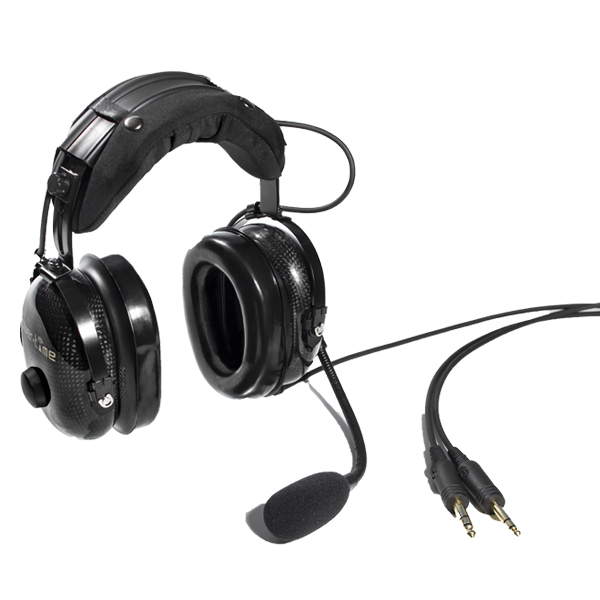
Power-Time DF-5 Headset
- SNR: 28 dB
- Description: The Power-Time DF-5 headset offers substantial noise reduction with an SNR of 28 dB, making it suitable for moderately noisy environments. Its padded headband and ear cushions ensure comfort during extended wear, while its adjustable design provides a secure fit, enhancing its overall effectiveness

Power-Time AG-1 Headset
- NRR: 25 dB
- Description: The Power-Time AG-1 headset features an NRR of 25 dB, providing effective protection against moderate noise levels. Designed for durability and comfort, it includes adjustable ear cups and a flexible headband to accommodate various head sizes and shapes, making it a reliable choice for both industrial and recreational use.
Selecting the Right Hearing Protection
When choosing hearing protection, consider the following:
- Noise Level: Measure or estimate the noise level in your work environment to determine the required NRR.
- Duration of Exposure: Longer exposure times may require higher NRR to ensure adequate protection.
- Comfort and Fit: Choose a device that fits well and is comfortable for extended wear.
- Compatibility: Ensure the hearing protection can be used in conjunction with other safety equipment, such as helmets or safety glasses.
Conclusion
The Noise Reduction Rating (NRR) is a critical factor in selecting the right hearing protection for your needs. By understanding how NRR is calculated and interpreting its value, you can make an informed decision to protect your hearing effectively. Remember that proper fit, comfort, and consistent usage play significant roles in ensuring the effectiveness of your hearing protection. Prioritize your auditory health and choose the hearing protection that best meets your work environment and personal comfort needs.
What Makes Handset H-250/U and PTE-M004 Stand Out in Communication Technology?
What does the military use for ear protection?